ABOUT
Alto provides the operational backbone for specialist clinics and private hospitals across Ireland and the UK, closing the information gap between the initial referral and the point of care.
The Intelligent Infrastructure for Modern Healthcare

The Story of Alto
I was in a hospital cafe, waiting for a physio appointment, when I got chatting to a consultant I knew who was sorting referrals by hand. Stacks of paper. Scribbled notes. Passed to a secretary to process. A few minutes later, he pointed out a junior doctor at another table doing exactly the same thing. Same job, same paper, two of the most expensive people in the building, doing it by hand.
It struck us then: here was a healthcare system with robots in theatres, AI in diagnostics, and cutting-edge technology everywhere, and yet the moment a new patient needed to be seen, it all funnelled down to a manual, paper-based process. Coffee stains on referrals. Handwriting nobody could read. Transfer and transcription errors. Priority decided by whoever happened to be sitting at the desk that morning, or by a medical secretary. As that original consultant put it, the person making those processing decisions was often the least clinically trained person in the building.
It struck me then: here was a system with robots in theatres, AI in diagnostics, cutting-edge technology everywhere, and yet the moment a new patient needed to be seen, all of it funnelled down to a manual, paper-based process. Coffee stains on referrals. Handwriting nobody could read. Transfer and transcription errors. Clinical prioritisation decided on the fly, often, as one consultant put it to me, the least clinically trained person in the building.
The more I dug, the worse it looked. I spoke to medical secretaries, to hospital COOs, to private hospital and group-practice CEOs, and the same broken front door kept costing them in different ways.
It is a clinical safety issue: the urgent case that waits behind routine ones because no one read it in time.
It is a patient experience one: the patient who disappears into a black box, never sure whether their referral has even been received, let alone booked.
It is a business problem: every referral that stalls or slips is a patient who books elsewhere, and a fee that goes with them.
It is an asset utilisation problem: expensive new theatres, clinics and hospitals running below capacity while ready patients sit unprocessed in a queue, or cancel late.
And it is an operational one: the whole thing rests on a few people doing manual parsing and processing that’s hard to scale, so its hard to grow without drowning admin teams.
A safety risk, a frustrated patient, lost revenue, an idle theatre, and a drowning team, all hiding in the same pile of paper.
Now picture that same referral arriving and being read the moment it lands. Checked for what is missing, the gaps chased automatically. The urgent case surfaced first, not buried. The patient kept informed instead of left wondering. A complete, prioritised case handed to the team, ready to be seen. The consultant opens a clean list instead of a backlog. The patient knows where they stand. The practice keeps the patient, and the fee. The theatre runs full instead of half empty. The admin team oversees the flow instead of firefighting it. That is the front door we are building.
I founded Alto to fix it. Not to disrupt the patient-doctor relationship, but to give clinical and administrative teams the infrastructure to do their jobs properly. By turning fragmented, unstructured intake into decision-ready data, we take the detective work out of the previsit period, protect the revenue and capacity healthy clinics depends on, and give clinical teams back the time and clarity to focus on practicing medicine.
We are based in Ireland and serve the UK and European markets. But the reason any of this matters is simpler than the technology behind it. Somewhere in every pile of paper is a patient waiting to be seen, and our job is to make sure they are not the one who slips through.
Our Mission
At Alto, we exist to help patients get seen faster and free private clinics and hospitals from referral admin overload.
Our Vision
Halve time to first visit by eliminating referral and pre-visit delays.
Our Values
We prioritise safety, security, transparency, and reliability in everything we build. We believe in the importance of clinical input, diverse perspectives, and continuous improvement. We move with urgency and purpose, and we hold ourselves to the highest standards of clinical and technical integrity.
Meet the team
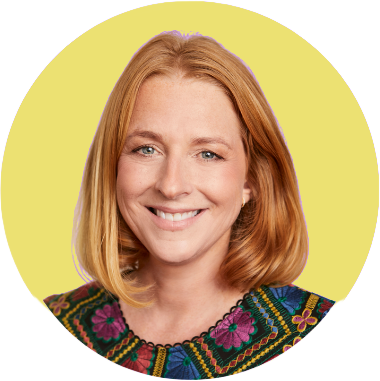
Marita Kenrick
Co-Founder and CEO
Marita holds a Master of Public Health from the University of New South Wales. Before founding Alto, she led strategy and insight teams focused on prevention and early diagnosis at the Australian Health Department and Public Health England. [LinkedIn]
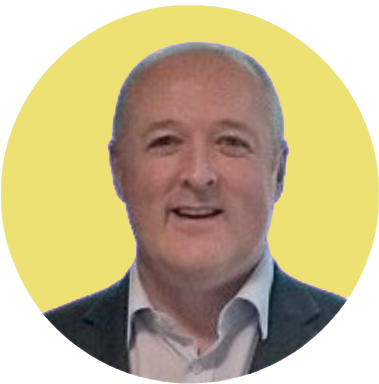
Xiao Zhang
Co-Founder and CTO
Xiao studied Computer Science and Computational Linguistics, earning a Master's in Speech and Language Processing from Trinity College Dublin. Prior to Alto, he worked for Meta's Oculus and Longcheer, building expertise in AI and engineering. [LinkedIn]
Dr Orla Michelle Shanahan
Founding Clinical Lead
Orla is a [specialty] registered with the Irish Medical Council. She [one line of clinical background and focus], and at Alto she leads clinical input across [the endoscopy pilot, clinical safety, and the prioritisation standard the Assistant applies]. [LinkedIn]
Dr. Peter Donnelly
Regulation & Quality Lead
Peter earned his PhD in Digital Signal Processing from Queen's University and has over 25 years of experience as a medical device innovator. He has founded multiple companies and led Nasdaq listings. [LinkedIn]

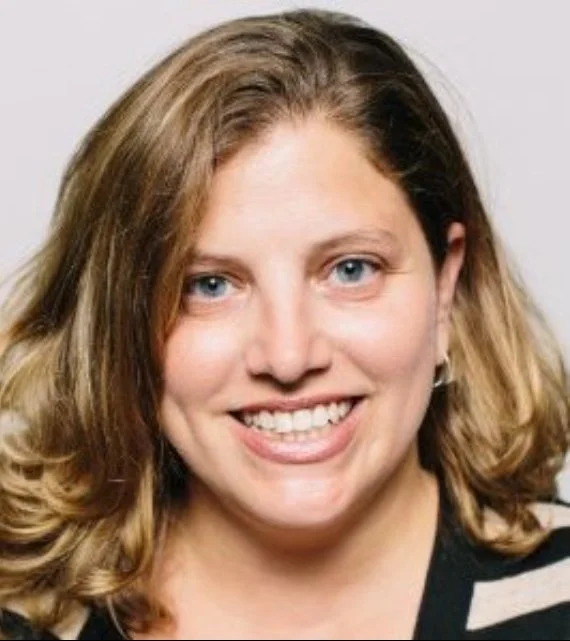
Raela Ripaldi
Growth Lead
Raela leads Alto's growth, brand and communications. [One line of background, if you want it public.] [LinkedIn]